There is a specific kind of magic in visiting the Andes just as the seasons shift. We arrived in Peru in early March, catching the final curtain call of the rainy season. While many travelers wait for the bone-dry winter months, there is a distinct advantage to this timing: the mountains are at their most vibrant, carpeted in a deep, shocking green that you simply won’t see in July.
The Ascent: Anticipation on Rails
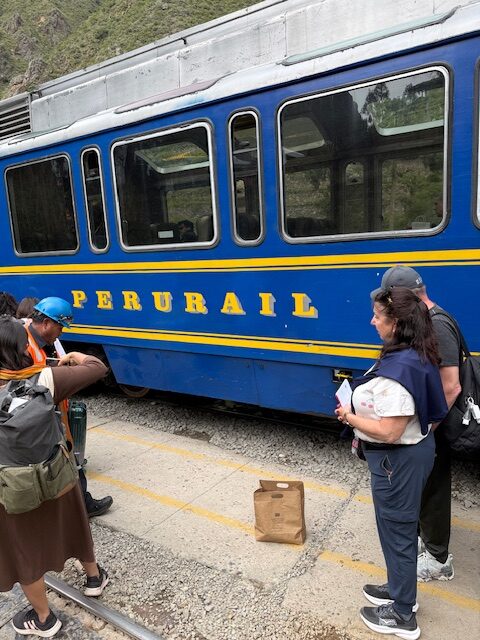
The journey truly begins in Ollantaytambo. The 90-minute train ride to Aguas Calientes is quite scenic, with views that include snow-capped mountains as you journey along the banks of the Urubamba River. Knowing that this is the gateway to Machu Picchu, anticipation builds with every bend.
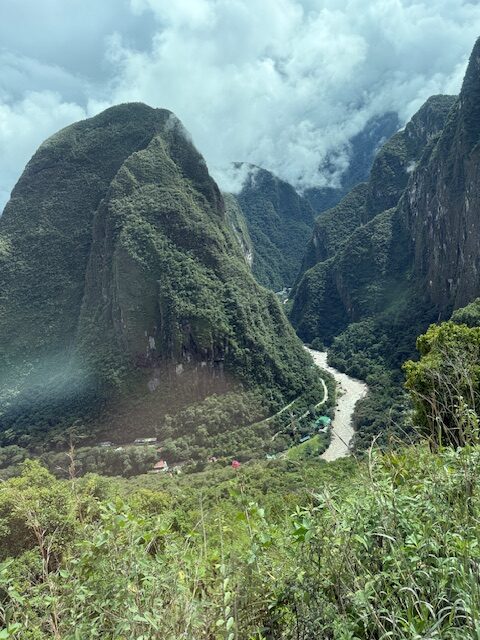
As the train descends from the high sierra into the lush cloud forest, the vegetation turns tropical and the canyon walls tighten. Through the panoramic windows, you’re constantly searching the ridgelines for a glimpse of stone. It’s a rhythmic, mechanical prelude to the ancient world. You watch the Urubamba churn with white water below, realizing you are entering a hidden pocket of the world that remained a secret to the outside for centuries. By the time you pull into the station, the energy among the passengers is palpable.
The Strategy: An Overnight in Aguas Calientes
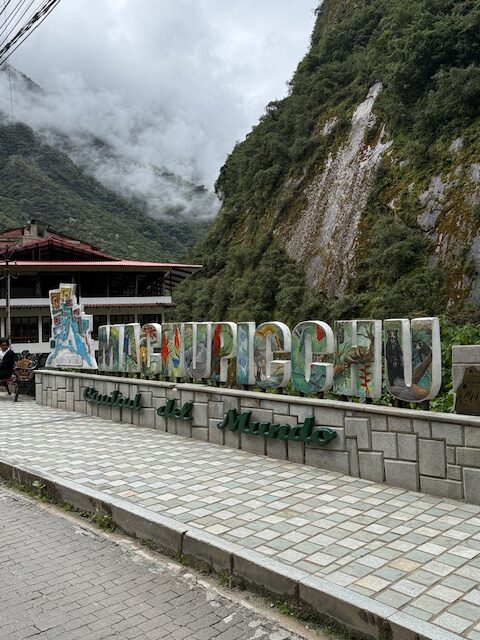
Aguas Calientes is a functional, bustling tourist hub tucked into a deep gorge. It doesn’t need to be romanticized; its greatest value is its proximity to the sanctuary. We opted for an overnight stay for one primary reason: the early start.
In the rainy season, the weather follows a pattern. The mornings often offer a window of clear, mist-swirled views, while the clouds tend to heavy up and release rain by mid-afternoon. By staying in town—bringing only a small overnight bag and leaving our main luggage back in the Sacred Valley—we were positioned to catch an early breakfast and head out before the afternoon showers arrived.
The Revelation of the Citadel
The bus system from the town up to the entry point is remarkably straightforward. A fleet of buses shuttles visitors up the “Hiram Bingham” switchbacks. It’s an easy 25-minute climb that saves your legs for the actual exploration of the ruins.
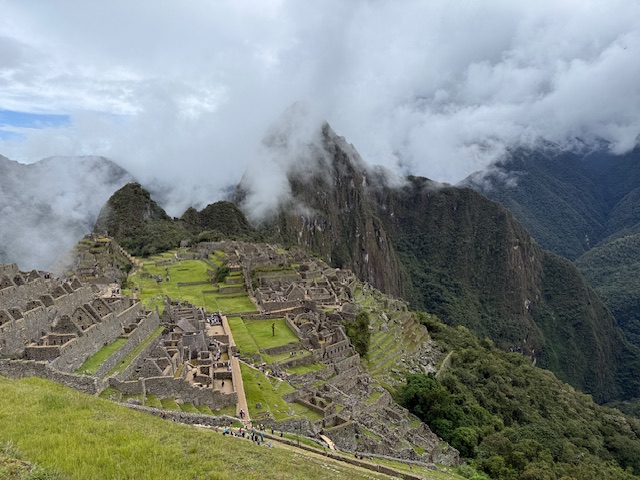
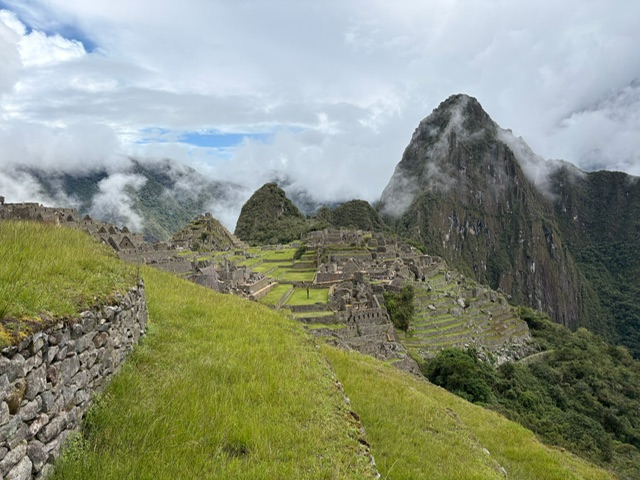
When you finally pass through the gates, the “magnificence” isn’t hyperbole—it is a physical weight. Nothing prepares you for the sheer scale of the vision. Machu Picchu isn’t just a set of ruins; it is an architectural masterpiece draped over a jagged mountain saddle.
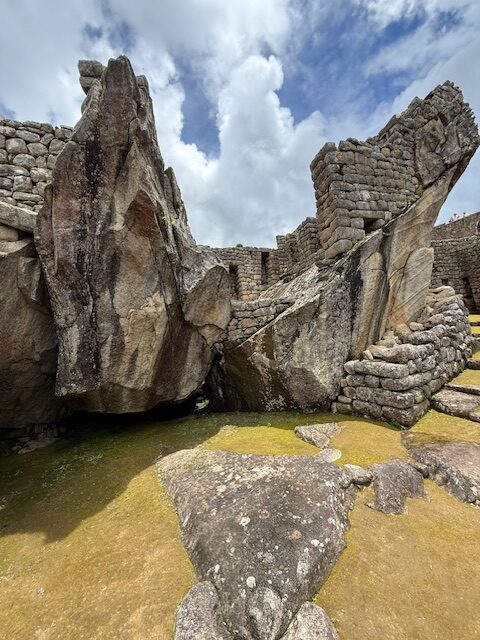
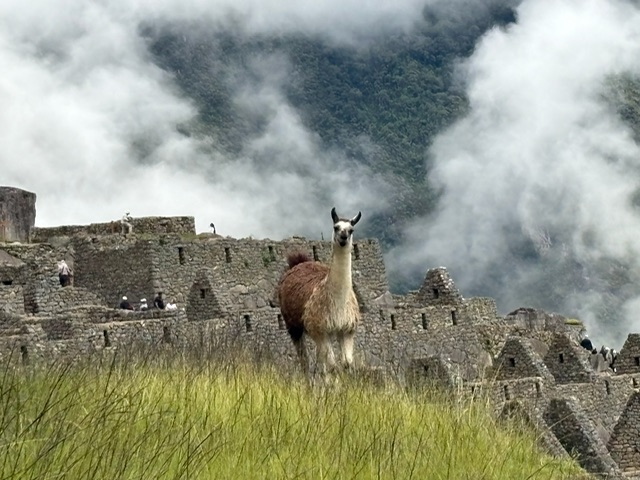
In early March, the mist often clings to the granite peaks, lifting periodically like a curtain to reveal the precision of the Inca stonework. You see the Intihuatana stone, an ancient sundial carved directly from the bedrock, and the Temple of the Sun, where the stones fit so tightly a blade of grass cannot pass between them.
Conclusion
The views are breathtaking in the literal sense. To one side, the sheer drop into the Urubamba Valley makes you marvel at how these massive stones were ever transported here. To the other, the peaks of Huayna Picchu and Machu Picchu Mountain stand like silent sentinels. There is a profound silence at the site, broken only by the wind, that forces you to appreciate the isolation and the genius of a civilization that built a city in the sky. It is a place that feels entirely untethered from the modern world.
Planning Your Permits
If you are planning your own trip, the “book early” mantra cannot be overstressed. The Peruvian Ministry of Culture has strict daily limits to preserve the site:
- General Entry (Circuits): There are three different circuits one can take. Tickets are specific to the circuit and limited and specific to time slots. You must enter during your designated hour.
- Huayna Picchu: This is the famous “sugarloaf” peak behind the ruins. It is capped at 200 hikers per day, split into early morning groups. These tickets often sell out 3–4 months in advance.
- Machu Picchu Mountain: The higher, longer trek opposite Huayna Picchu. This is limited to 400 hikers per day and offers the classic “postcard” birds-eye view of the entire complex.
Travel Tip
If you’re visiting during the shoulder season like we did, bring a high-quality, lightweight poncho. Umbrellas aren’t allowed inside the sanctuary, and when the Andean rain decides to arrive in the afternoon, you’ll be glad you have the gear to keep exploring.